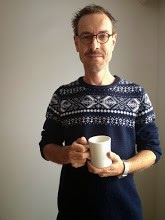
The new Canadian champion is the old one.
At least he was champion, three times even, several years ago. And three times top three at the world championships.
Every one liked his shows and, of course, his drinks.
He's the Jimmy White of the WBC and .... my favourite for Atlanta.
Go Sammy!
Click this link for the results and a photo.
Saturday, November 15, 2008
Sammy Piccolo is Back

Thursday, November 13, 2008
Coffee for Ethiopians
 In contrast of many coffee producing country's, Ethiopia is using a lot of their beans for proper use.
At their famous coffee ceremony you can have a good idea about the way they roast and brew their coffee.
Here's how it goes :
Freshly cut grass and flower petals are spread on the floor where the ceremony will be held, to resemble the carpet of grass and flowers found in nature.
The women who prepare and serve the coffee usually wear traditional Ethiopian clothing.
The lit charcoal burner is place on the grass carpet. The dried green raw coffee beans are washed and placed in a metal ladle or pan to be roasted over the charcoal burner. The rich, pungent aroma of coffee soon fills up the air, as does the sweet aroma from a very small quantity of incense, which is also burned in an incense burner. It's almost like we're in a church.
The roasting coffee beans are shaken sporadically until they turn dark brown.
Then the beans are grinded in a small mortar where they are (literally) smashed into powder.
The powdered coffee is poured skillfully into a jebena, a special clay kettle with a rounded bottom and a long skinny spout, which has already been filled with boiled water. If the water overflows when the coffee is added, a little cold water is added. After the coffee boils for a while, the jebena is removed from the charcoal. Finally the jebena is put on a special round stand for a short while to let the coffee grounds settle to the bottom.
The coffee is then poured skillfully into small coffee cups without handles.
Most people add lots of sugar and even milk, but the girl (on the photo) at the Bishangari lodge at Lake Langano did such a brilliant job the coffee was dead perfect. By far the best cup I had in those ten days. Most of the coffee is roasted way too dark, but not this one. Congratulations.
Off course, it helps when your boss is the brother of the most specialised coffee exporter in Ethiopia. More about Abdullah Bagersh in another post. Here at the local market in Lallibella you see the people are selling green beans from the local plantation.
Even in this dry area, the coffee tastes good and sweet.
From what I saw over all my years in coffee business, I guess almost all beans in Ethiopia got certain charms. It's mostly just a matter of the right picking, washing (or not), drying and packing.
Soon more about it....
Wednesday, November 12, 2008
SBux in Crisis

Starbucks profits dive by 97%
business.timesonline.co.uk
Met de bijbehorende spin van de heer Schultz

The froth comes off Starbucks
www.guardian.co.uk
"Latest figures from the ubiquitous coffee retailer show that people are less willing to part with their well-earned cash as recession looms."

Zelfs op Mars kan Starbucks niemand meer boeien
Blijkbaar heeft u in deze Moeilijke Economische Tijden geen zin meer om 4 euro voor een kopje koffie te betalen. En dat is niet leuk voor Starbucks; ze houden geen winst meer over.
Tuesday, November 11, 2008
Trabocca Office Addis
 Abraham of Trabocca gave us a warm welcome at their offices in Addis Ababa Ethiopia.
It was very interesting to hear about their initiatives to improve coffee quality, increase the farmer's income, detect and harvest new single origins and work together with specialised coffee company's around the globe.
The endless efforts of Menno Simons and the Dutch government have resulted in many happy Ethiopian coffee farmers and their family's and satisfied coffee amateurs. The average Ethiopian bean quality from Trabocca coffee bags is way higher than what we see from the Antwerp coffee trading company's. One of their interesting projects is the OCR ; Operation Cherry Red. Very simply it's the picking of only the reddest cherry growing at the tree. It sounds simple, but for most farmers it means much more work. Luckily Trabocca is ready to pay for these extra efforts and of course we, coffee lovers, are ready to pay extra for extra quality as well.
A must read article about Trabocca's OCR project is this one at CoffeeGeek.
For the moment they only talk about something like 20 lots of 25 to 50 bags per location of washed naturals.
For the rest Trabocca's main objectives are
- quality first
- keep beans from different origins/farms separate
- double cupping to secure quality standards
With the soon upcoming efforts like vacuum packing, cotton bags (around the jute) and, new for me, Grain Pro Bags and Aluminium foil packing, the future of Trabocca and their Ethiopian coffee farmers seems to be guaranteed.
Looking forward to taste all Trabocca specialty's....
Sunday, November 9, 2008

Thursday, November 6, 2008
Gondar Barista
 This Gondar Barista was so overwhelmed she couldn't even smile.
Very unusual in Ethiopia where young and old are the most friendly and warm people I ever encountered.
Although Ethiopian coffee beans are the best in the world and the locals like to get high on their own supply, the coffee drinking in Ethiopia was not what it should be.
Two things to separate. First you have their famous coffee ceremony. Let's say the way they roast, grind and brew their coffee at home for the last hundreds of years. On this one I'll post you later on.
Second is the espresso machine. Even the smallest bar has one. On the photo you see a typical espresso lever machine. The fact the Italians where colonising this country for a very short period makes it a place where it's normal to drink macchiato's or espresso. And the lever machines are still omni present. Even new machines have often one or two handles to press the hot water through the filter baskets.
The espresso is mostly served in small cups, filled to the rim. The looks and taste reminds me a bit of France, but not as bad.
The macchiato (very cheap; plus minus 20 Euroct) is served in a small glass and resembles best at the Spanish Cortado Condensato, what's called a caffe bonbon in Madrid, if I remember well. First some sweet condensated milk, then the espresso and a layer of warm milk on top. Not my kind of cup, but very popular in this country.
The cappuccino is another drink to be avoided. The one we had at the Central hotel in Jimma (€ 0,35) tasted like the Nescafé cappuccino powder bags drinks my mother used in the past. Brrrr. Most of cappuccino's looked like a cheap 'airport cappuccino'. Not good.
But even worse was the only real 'airport cappuccino' Isabel ordered at the Addis airport. It was very early and the bar just opened. The two girls behind the bar looked to be totally lost and what they served was unbelievable. First they had a small pitcher with some pre made coffee. They steamed this one, poured a bit in a cup and added a lot of warm milk. We couldn't taste any coffee and told her. Then she warmed a bit more coffee and added this to the cup. What a crap and the highest price ever. Complaints didn't help, so we gave her the money and back the 'coffee'.
Afterwards we think, since they acted very strange and difficult, they did this to put the money of the drink in their own pocket. Who knows?
The regular cup of coffee is dark, strong, but not much of details and fruit is present. Biggest mistakes are the roast - too dark- and the fact they mostly use pre ground. The fact most machines are old and not too well maintained doesn't do a lot of good of course. Overal they where drinkable, but a bit of warm milk and sugar helped.
Also noticeable is the fact the local Barista has to stay aside of their machine. This Gondar (a historical city in the North of Ethiopia) Barista girl was standing there in a dark corner of the establishment. The place was very small, cheap and not crowded, but still she had to stand by the machine for the rest of the day, pulling one or two shots every 15 minutes. Weird. But this wasn't too bad for her. Some of her colleagues 'Barista's' had their machine in a small kitchen somewhere in the back, without any direct sunlight or clients around. Consolation for them can be found in the fact so many others do not have a job at all and live in deep poverty. Tough!
Wednesday, November 5, 2008


Subscribe to:
Posts (Atom)